
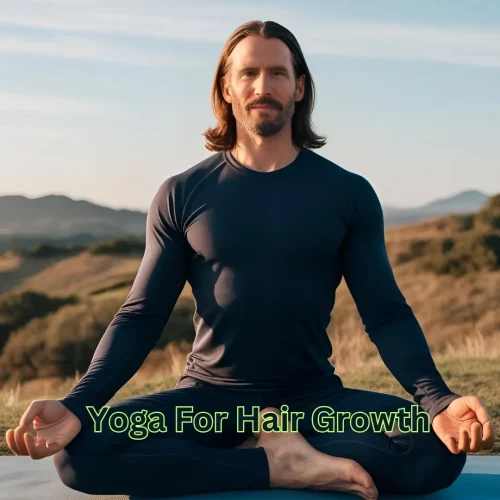
YOGA FOR HAIR GROWTH
Did you know that yoga is an effective natural way to promote hair growth? Are you also facing the problem of hair loss and you are not getting any permanent solution to get rid of this problem. If you need natural solutions to fight your hair loss problem then now your journey can end as the age-old method of yoga can solve your problem. Most people know that yoga provides us with physical and psychological benefits, but still people fail to understand its ability to enhance hair health. When you add physical postures along with breathing exercises and scalp massage to your daily practice, it increases the flow of blood to your scalp. This helps to reduce your stress that causes hair loss and creates an optimal environment for hair growth.
This blog explains the remarkable connection between yoga and healthy hair by presenting a selection of important yoga postures that give remarkable results. The following section includes instructions on breathing techniques as well as yoga-inspired scalp massage methods that will boost your current hair treatment activities. Building up a yoga practice will strengthen your body and help you achieve amazing vibrant hair as instructed in this article.
How stress affects hair growth ?
1. Telogen Effluvium (Hair Loss)
One of the most common effects of stress on hair is telogen effluvium. Under this, under stress, a large number of hair follicles prematurely enter the telogen phase (resting phase) of the hair growth cycle. Due to which the affected hair falls out more easily after 2-3 months. As a result, thinning of hair or more hair loss while brushing or washing is visible. Seeing this makes you even more nervous and you become more stressed.
2. Trichotillomania (hair pulling disorder)
Chronic stress or anxiety can trigger a condition called trichotillomania, in which you have the urge to pull your hair out when you’re angry. This behavior is often a coping mechanism to relieve stress, but hair pulling like this can cause serious problems, leading to hair loss and even permanent damage.
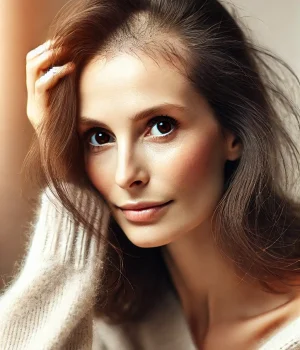
3. Alopecia areata (autoimmune reaction)
High levels of stress can trigger an autoimmune reaction, where your body’s immune system attacks hair follicles. This results in alopecia areata, in which round patches of hair loss form on your scalp or other parts of the body. Seeing this can make you even more stressed. In some cases this severe stress can cause your hair to fall out completely (alopecia totalis).
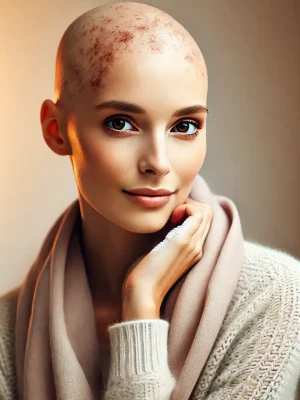
Stress can have a significant negative impact on your hair growth and overall hair health. When you experience stress, your body triggers a “fight or flight” response that releases hormones like cortisol and other stress-related chemicals. This can interfere with your normal hair growth cycle. Here is how stress affects your hair growth:
4. Disruption of the Hair Growth Cycle
The hair growth cycle normally has three phases:
- Anagen phase – This is the active growth phase (lasts 2-7 years)
- Catagen phase – This is the transition phase (lasts 2-3 weeks)
- Telogen phase – The resting phase when your hair falls out and the cycle starts all over again (lasts 3-4 months) Excessive stress can shorten the anagen phase which can push more of your hair into the telogen phase. This leads to increased hair loss and slower hair regrowth.
5. Hormonal imbalances and nutrient deficiencies
Excess stress increases cortisol levels in your body which can interfere with hormone balance including testosterone and DHT (dihydrotestosterone). Increased cortisol in your body can also reduce the absorption of nutrients like iron, zinc, and biotin, which are very essential for your healthy hair growth. Their deficiency can hamper your hair growth.
What could be the causes of hair loss in you?
The hair growth cycle normally has three phases:
1. Hormonal changes
- Pregnancy and postpartum: Hormonal changes during and after pregnancy can cause temporary hair loss.
- Menopause: Your estrogen levels drop, which can cause your hair to thin.
- Thyroid disorders: Both hyperthyroidism and hypothyroidism can disrupt your hair growth cycle.
2. Genetics (androgenic alopecia): The most common cause of hair loss and baldness in men and women is hereditary. In which your hair gradually thins, usually starting from the hairline, crown or part line. Then gradually your hair starts falling.
3.Stress (telogen effluvium): Emotional or physical stress (illness, surgery, trauma) can push hair follicles into a resting state, which can cause your hair to fall out.
4. Nutritional deficiencies
- Iron deficiency: Low iron levels can weaken your hair follicles.
- Vitamin deficiencies: Lack of vitamins such as B12, D and zinc can lead to poor hair health.
- Protein deficiency: Your hair is made of a protein called keratin, so inadequate intake can slow growth.
5. Autoimmune conditions
- Alopecia areata: An autoimmune condition in which the immune system attacks hair follicles causing patchy hair loss.
- Lupus: Can cause inflammation and scarring on your scalp, leading to permanent hair loss.
6. Medical Conditions and Treatments
- Scalp infections: Having a fungal infection such as ringworm on your scalp can damage hair follicles.
- Cancer treatments: Certain treatments such as chemotherapy and radiation often cause temporary hair loss.
- Polycystic ovary syndrome (PCOS): Your hormonal imbalances can cause increased hair loss.
7. Hairstyling and Hair Treatments
- Tight hairstyles: Styles like braids, ponytails or buns can cause traction alopecia.
- Heat and chemical damage: Frequent use of hot tools and chemical treatments on hair can weaken and break your hair.
8. Medications: Some medications you take (e.g., for blood pressure, depression or arthritis) can trigger hair loss as a side effect.
9. Aging: As you age, your hair naturally thins, making it more likely to fall out.
10. Lifestyle factors
- Smoking: Excessive smoking can also cause hair loss. This is because excessive smoking reduces blood flow to your hair follicles.
- Lack of sleep: Poor sleep quality can increase your stress hormones, which affect your hair growth.
Best Poses of Yoga for Hair Growth
Yoga has a great contribution in our life. If you do yoga regularly, you will not only be physically but also mentally fit. Here we are going to give you information about some yoga postures which can help in controlling hair loss by improving blood circulation in your scalp, reducing stress and balancing hormones. These three major factors contribute to the health of your hair. Although yoga alone cannot completely prevent hair loss, it can play an important role in maintaining strong and healthy hair.
# Adhomukha Svanasana(Downward Facing Dog Pose )
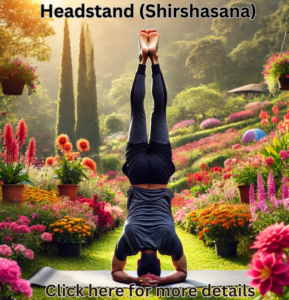
# Headstand (Shirshasana)
# Standing Forward Bend (Uttanasana)
# Fish Pose (Matsyasana)
Adhomukha Svanasana(Downward Facing Dog Pose ):
The Downward Facing Dog Pose is a great pose to promote your hair growth. This inversion increases blood flow to the scalp which nourishes your hair follicles.
To perform: (i) Start on hands and knees. (ii) Lift your hips up and straighten your arms and legs.(iii) Form an inverted V-shape.(iv) Hold for 30-60 seconds.
Benefits of this pose: (i) Increases blood circulation to your head.(ii) Relieves you from stress which is a common cause of hair loss.(iii) Strengthens your upper body and core.

B. Headstand (Shirshasana):
The headstand or Shirshasana is known as the “king of asanas” for its many other benefits along with stimulating your hair growth.
To do Shirshasana safely: (i) Start by kneeling down and placing your palms on the floor. (ii) Place the top of your head on the floor between your hands. (iii) Slowly raise your legs while engaging your core. (iv) Maintain balance by controlling your breathing. (v) Hold the pose for a few breaths before slowly coming down.
Benefits of this asana:(i) Improves blood circulation in your scalp which improves the health of your hair. (ii) Reduces the level of stress and anxiety in your body. (iii) Strengthens your shoulders, arms and core.
Caution: If you are new to this pose, practice with a qualified instructor.
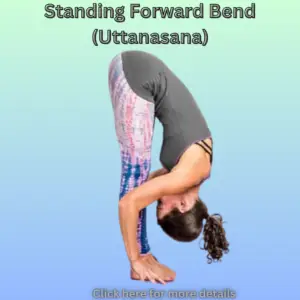
C. Standing Forward Bend (Uttanasana):
Uttanasana is a basic yoga pose in which you bend your hips forward while keeping your spine long. It is a calming and rejuvenating pose that stretches the hamstrings, calves and lower back.
How to do Uttanasana: (i) First, take a long deep breath and then stand with feet hip-width apart. (ii) Now bend forward and place your hands on the floor. (iii) Relax your neck and head, allowing gravity to increase blood flow to your scalp.
Benefits of this asana:(i) It stimulates your digestion and improves circulation. (ii) Stretches your hamstrings, calves and spine. (iii) Reduces fatigue and headaches by doing this asana.
D. Fish Pose (Matsyasana):
Fish Pose (Matsyasana) is a lying down back bending yoga posture that stretches your chest and throat while it strengthens your upper back. It is traditionally considered the opposite of Shoulder Stand and is known for its deep heart opening and therapeutic benefits.
How to do Fish Pose (Matsyasana): (i) First of all, lie down on your back. (ii) After this, lift your chest up and bend your back. (iii) Now rest the upper part of your head on the ground. (iv) Stay in this position for 15-30 seconds.
Benefits of this asana:(i) It stretches and opens your chest, throat and shoulders.(ii) Stimulates your throat chakra, aiding communication. (iii) It relieves your stress and fatigue.

Breathing Techniques to Boost Hair Growth
A.Kapalbhati for detoxification:
Kapalabhati pranayama is a powerful breathing technique of yoga. This fast breathing exercise helps cleanse your body of toxins and promotes better circulation to your scalp and hair follicles.
How to do Kapalabhati: (i) To do Kapalabhati Pranayama, first sit in a cross-legged position (Padmasana or Sukhasana) with a straight spine.(ii) Place your hands on your knees in Gyan Mudra (thumb and index finger touching).(iii) Now take a deep breath to do Kapalabhati Pranayama. (iv) Contract your abdominal muscles and forcefully exhale through the nose. (iv) Continue this rhythmic breathing for 1-5 minutes. Start it slowly and gradually increase the speed.
Benefits of this asana:(i) Increases oxygen supply to hair follicles. (ii)Reduces stress and tension. (iii) Improves blood flow to the scalp.
B.Anulom Vilom for stress reduction:
Anulom Vilom is a powerful yogic breathing technique that balances the mind and body by purifying your nadis (energy channels). Doing this balances your body energy and reduces stress, which can significantly affect the health of your hair.
How to do Anulom Vilom: (i) To do Anulom Vilom, first sit in a cross-legged position (Padmasana or Sukhasana) with a straight spine.(ii) For this, take a deep breath through the left nostril while closing the right nostril with your thumb.(iii) Now close the left nostril with your ring finger and exhale through your right nostril. (iv) Now again inhale through your right nostril, close it and exhale through the left nostril. (iv) Thus one cycle is completed. Repeat for 5-10 minutes while you breathe slow and steady.
Benefits of this asana:(i) Balances the left and right hemispheres of your brain.(ii)Reduces stress, anxiety and improves the ability to concentrate (iii) Improves oxygen supply to the scalp and lungs .
C.Bhramari for improved blood circulation:
Bhramari Pranayama (Bee Breath) Bhramari Pranayama is a calming breathing technique that involves making a humming sound like a bee.
How to do Bhramari Pranayama: (i) To do Bhramari Pranayama, first sit in a cross-legged position (Padmasana or Sukhasana) with a straight spine and Close your eyes. (ii) Place your thumbs on your ears to close them and place your index fingers over the eyebrows. Similarly place your middle fingers on the eyelids, ring fingers on the nostrils and little fingers on the corners of the lips.(iii) Now take a deep breath slowly through the nose. Then as you exhale, hum softly like a bee (mmmm sound). Feel the vibration in the head and chest as you exhale. (iv) Initially practice this pranayama for 5-10 rounds then gradually increase the duration.
Benefits of this asana:(i) The vibrations produced during Bhramari stimulate blood flow to your scalp which nourishes your hair follicles and potentially promotes hair growth.(ii) Instantly calms the mind and reduces stress.
Scalp Massages for Hair Growth & Hair Loss Prevention
Scalp massages stimulate your hair growth, are a simple yet effective way to improve scalp health and reduce hair loss.
How to do Scalp Massage: (i) Using natural oils enhances the benefits of scalp massage. For this, you can use coconut oil, castor oil, rosemary oil, amla (Indian gooseberry) oil, argan oil or jojoba oil. (ii) Warm the oil slightly for better absorption. Start massaging from your forehead/hairline and move towards the back of your head. (iii) Apply the oil to the base of your head and gently massage your scalp with your fingers. (iv) Massage for 5-10 minutes at least 2-3 times a week.
Benefits of Scalp Massage: (i) Massaging the scalp increases blood flow to the hair follicles, which provide the oxygen and nutrients needed for your hair growth. (ii) It helps spread the scalp’s natural oils evenly, keeping hair hydrated and preventing dryness. (iii) Regular scalp massages strengthen your hair roots, reducing hair loss and breakage.
Conclusion: Yoga for Hair Loss
Yoga is a natural and holistic approach to reducing your hair loss and promoting hair growth. By improving blood circulation to the scalp, reducing stress, balancing hormones and enhancing digestion, yoga helps create an internal environment that supports healthy hair. While it may not completely prevent hair loss caused by your genetics or medical conditions, regular practice of yoga asanas, breathing exercises (pranayama) and scalp massage can significantly improve hair health.
Yoga should be combined with a nutritious diet, proper hair care and stress management techniques for best results. Consistency is key – practicing yoga regularly can lead to stronger, thicker and healthier hair over time.